How to Choose a Vegan Bag: Materials, Quality and Transparency
Choosing a vegan bag may seem straightforward, but the word “vegan” does not always tell the whole story.
A bag can be free from animal leather while still varying considerably in material composition, quality, durability and manufacturing transparency. Some vegan bags are made primarily from synthetic materials, while others incorporate plant-derived elements such as cactus, apple waste, mushroom mycelium, cork or natural leaves.
Understanding these differences can help you choose a vegan bag that reflects your values and works well in everyday life.
What Makes a Bag Vegan?
A vegan bag should be made without animal-derived materials such as leather, suede, wool or silk.
This applies to more than the outer surface. The lining, handles, trims, labels and decorative details should also be considered.
When reviewing a vegan bag, it can be helpful to look at the following components.
Outer Material
Check whether the bag is made from polyurethane, PVC, microfibre, recycled materials, plant-derived materials or a combination of these.
The term “vegan leather” describes a broad category rather than one specific material, so it is worth looking for a clear explanation of what the bag is actually made from.
Lining
Common vegan lining materials include cotton, organic cotton, recycled polyester and other synthetic textiles.
Silk, wool and some types of felt may be animal-derived, so the lining should not be overlooked.
Trims and Details
Check the handles, labels, decorative panels and zip pulls. A bag described as vegan should not include leather trims or suede details.
Metal hardware does not usually affect whether a bag is vegan, but secure, well-finished components can improve how the bag performs over time.
Hidden Components
Some parts of a bag, such as internal reinforcement and adhesives, may not be visible in the finished product.
Shoppers looking for more detail may wish to review the brand’s material information or contact the brand directly with specific questions.
Plant-Derived and Synthetic Vegan Materials
Vegan leather is not one single material. It can be made using synthetic polymers, plant-derived ingredients or a combination of both.
Understanding the material composition can be more useful than relying on the label alone.
Plant-Derived Leather Alternatives
Plant-derived leather alternatives may incorporate materials such as:
- Cactus
- Apple waste
- Mushroom mycelium
- Pineapple fibres
- Cork
- Natural leaves
These materials can reduce reliance on animal leather while creating distinctive textures, patterns and finishes.
Many plant-derived alternatives also use supporting layers or finishes to provide the strength, flexibility, structure and protection needed for everyday products.
When comparing materials, it is helpful to look for clear information about their composition, construction and intended use.

Synthetic Vegan Leather
Synthetic vegan leather is commonly made from polyurethane, known as PU, or polyvinyl chloride, known as PVC. It may also be combined with microfibre or other textile backings to create different levels of softness, structure and durability.
These materials avoid the use of animal leather and can provide consistent colour, water resistance and practical performance. However, quality and longevity can vary depending on the formulation, backing, coating and construction.
Rather than assuming that one material category is always better, consider the complete composition, how the bag is made and whether the brand provides clear care information.
How to Identify a High-Quality Vegan Bag
A thoughtful purchase should also be a practical one. Before buying, consider whether the bag is well constructed, suitable for your lifestyle and designed to remain useful beyond a single season.
Here are the details worth checking.
Construction
Look for clean, even stitching and reinforced areas around the handles, straps and closures. These are the parts of a bag that experience the most pressure during everyday use.
The bag should feel balanced and hold its intended shape without appearing overly rigid or fragile.
Hardware
Zips, clasps and fastenings should move smoothly and feel secure.
Well-made hardware can make a significant difference to how a bag performs over time, particularly around frequently used closures and strap attachments.
Material Feel
A quality vegan material should feel appropriate for the design of the bag. Some materials are soft and flexible, while others are structured and firm.
There is no single correct texture, but the surface should not feel excessively thin, brittle or poorly bonded.
Natural variation may also be expected when a material incorporates leaves, cork or other plant-derived elements. These differences are often part of the material’s character rather than manufacturing faults.
Lining and Interior Finishing
Check that the lining sits neatly inside the bag and that internal seams are properly finished.
Thoughtful compartments, secure pockets and practical closures can also make a bag more useful in everyday life.

Care and Repair
Look for clear care instructions and information about repairs or replacement parts.
Proper storage and regular care can help extend the life of a vegan bag, while access to repair services may prevent a minor fault from making the entire product unusable.
Looking Beyond Sustainability Labels
Terms such as “eco-friendly”, “green” and “sustainable” can mean different things depending on the product and the context in which they are used.
When comparing vegan bags, it can be helpful to look beyond broad labels and consider the practical information provided about each product, including:
- The materials used
- Where the product is made
- How it is constructed
- Care instructions
- Repair or replacement options
- Any specific claims made about the material or product
Clear and specific product information can make it easier to understand how a bag is made and whether it suits your needs and priorities.
What Makes THAMON Bags Different?

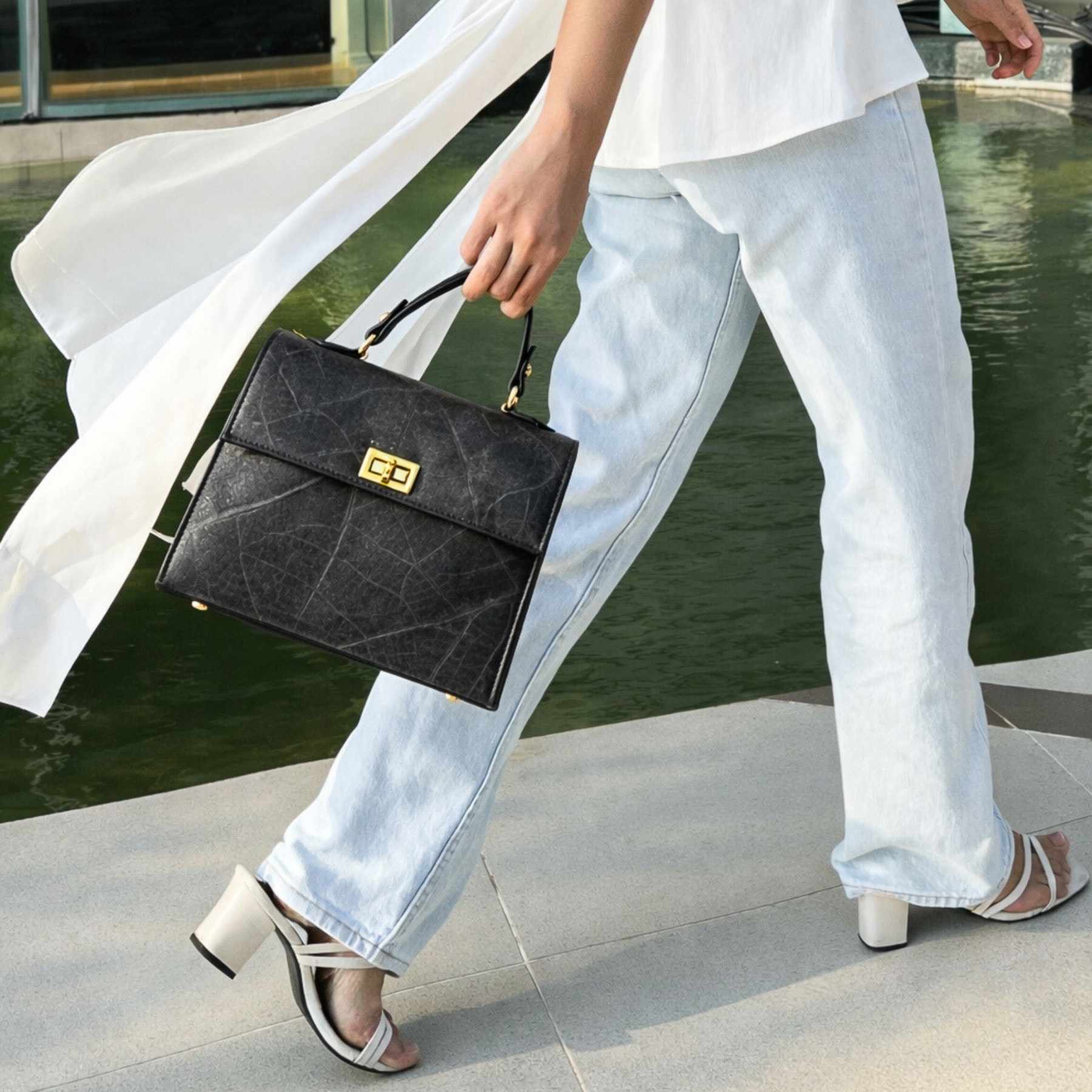
At THAMON, our signature Leaftex material is made with real tree leaves.
Each leaf is individually hand-dyed and bonded to a durable fabric backing before being finished with a protective coating. This process preserves the natural veins and markings of the leaf while providing the structure, flexibility and water-repellent finish needed for everyday accessories.
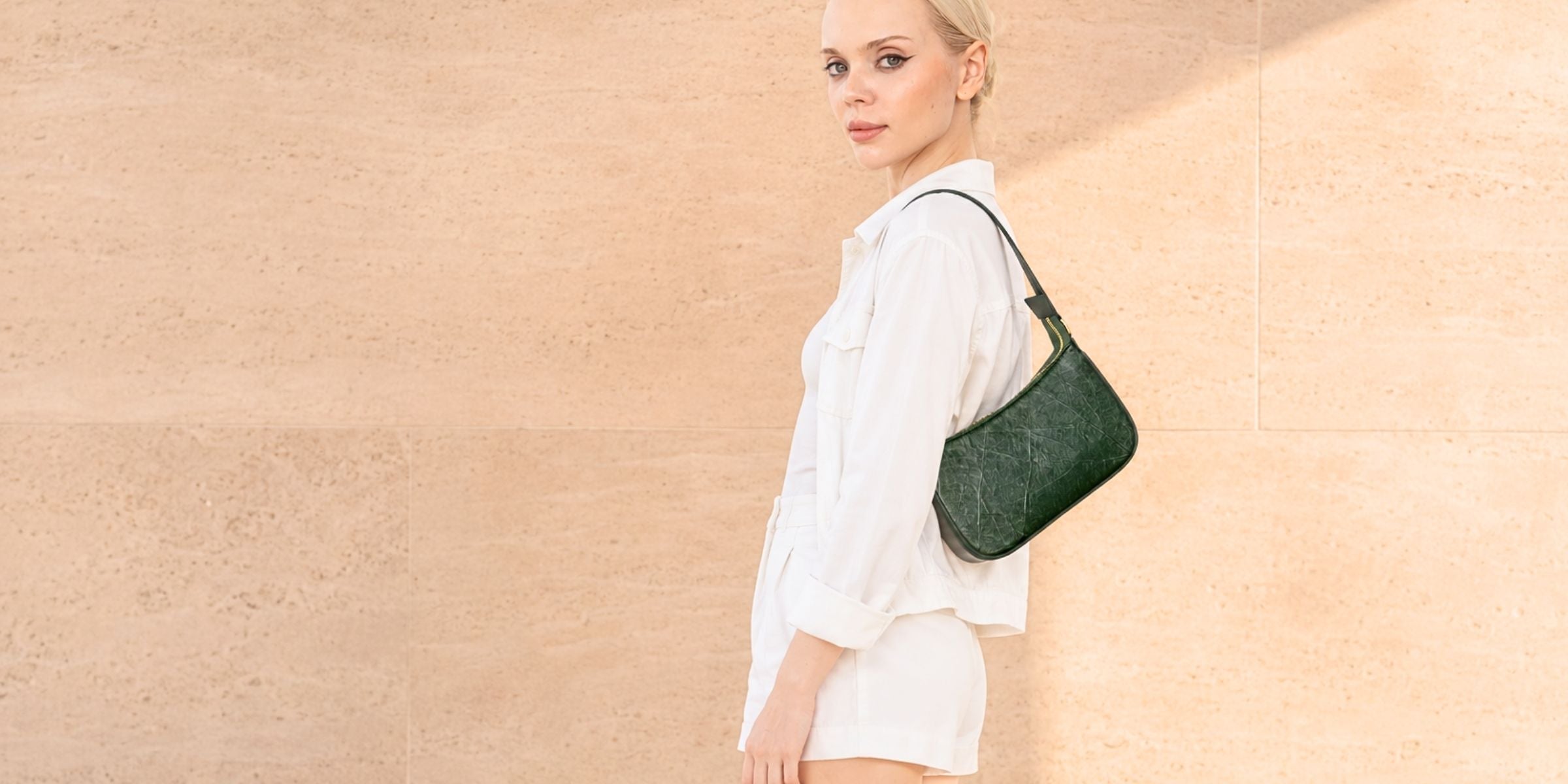
Because every leaf develops differently, each THAMON bag has its own individual vein pattern, natural markings and colour distribution. The age and natural characteristics of the leaf can also influence its final colour. Older leaves often create deeper, richer tones, while younger leaves may appear lighter.
These variations are an inherent characteristic of Leaftex rather than manufacturing imperfections.
Our collections may also use carefully selected vegan materials, including recycled PVC and microfibre materials, depending on the design and functional requirements of each product.
We carefully consider the construction, hardware and practical details of every design so that our bags can remain useful beyond a single season. Many THAMON styles feature timeless silhouettes intended to remain relevant year after year.
You can learn more about Leaftex and the materials used in our designs on the THAMON Materials page.
Choosing a Vegan Bag with Intention
The best vegan bag is not simply the one carrying a vegan label.
It should suit your lifestyle, reflect your values and be made with enough care to remain useful over time. Look beyond marketing language and consider the material composition, construction, functionality and transparency of the brand behind it.
A considered purchase does not have to be perfect. It should be informed, practical and based on a clear understanding of what matters to you.
Explore the THAMON collection of vegan bags, made with distinctive materials and designed for everyday use.


Leave a comment
This site is protected by hCaptcha and the hCaptcha Privacy Policy and Terms of Service apply.